Range of motion: how far a joint moves, measured in degrees
Range of motion, or ROM, is how far a joint can move in a given direction, measured in degrees from a neutral starting position. At Adapt in North Sydney, physiotherapists measure it at assessment and at reviews where it shapes the plan, particularly after knee replacement and in shoulder rehab, alongside strength testing.
Movement and strength are reviewed together
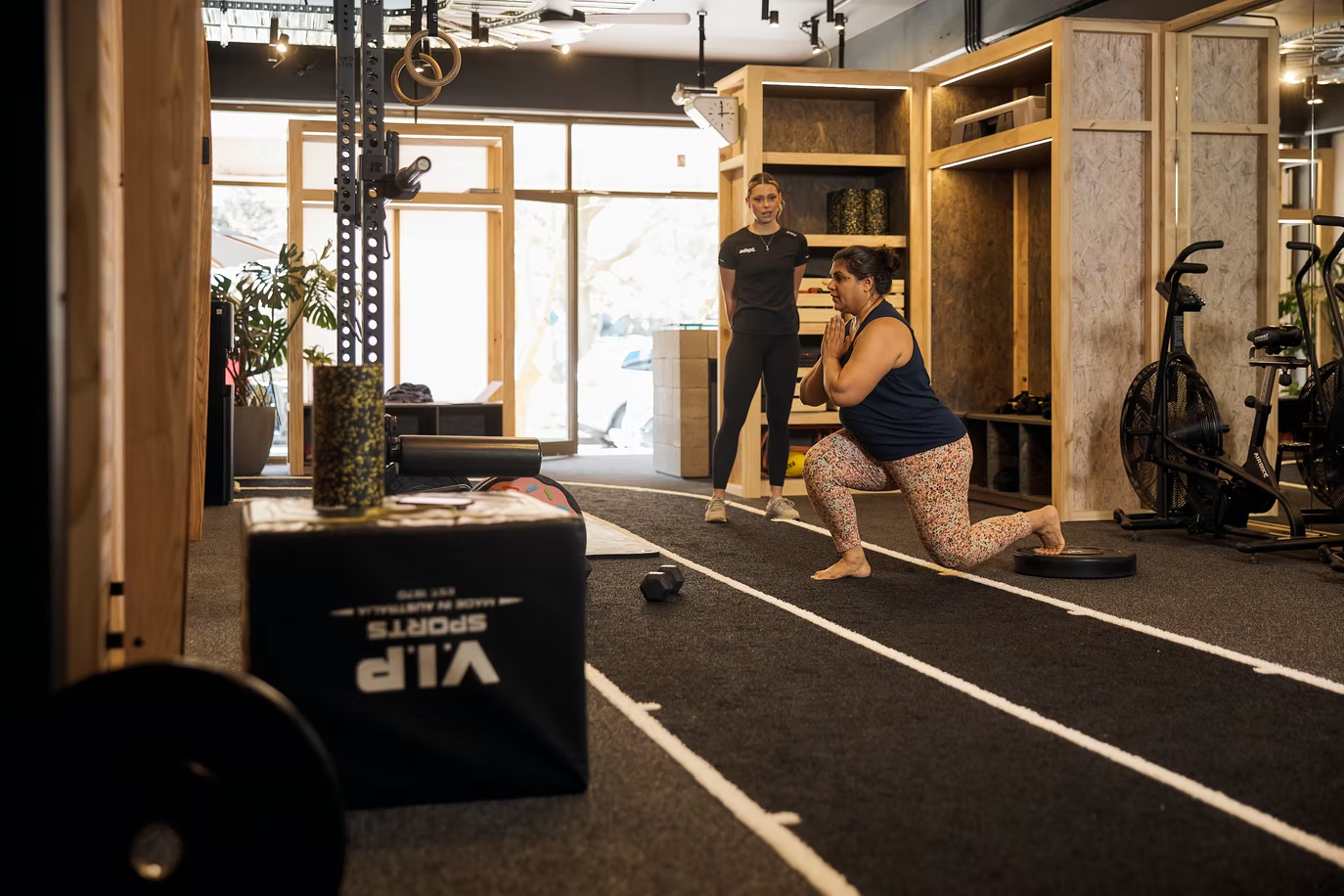
A joint can bend fully and still lack the strength to control that range under load, so ROM is read with strength testing and how you move in real tasks. The exercises on the gym floor then work through the range you have, adding load as progressive loading allows.
How gym-based physiotherapy works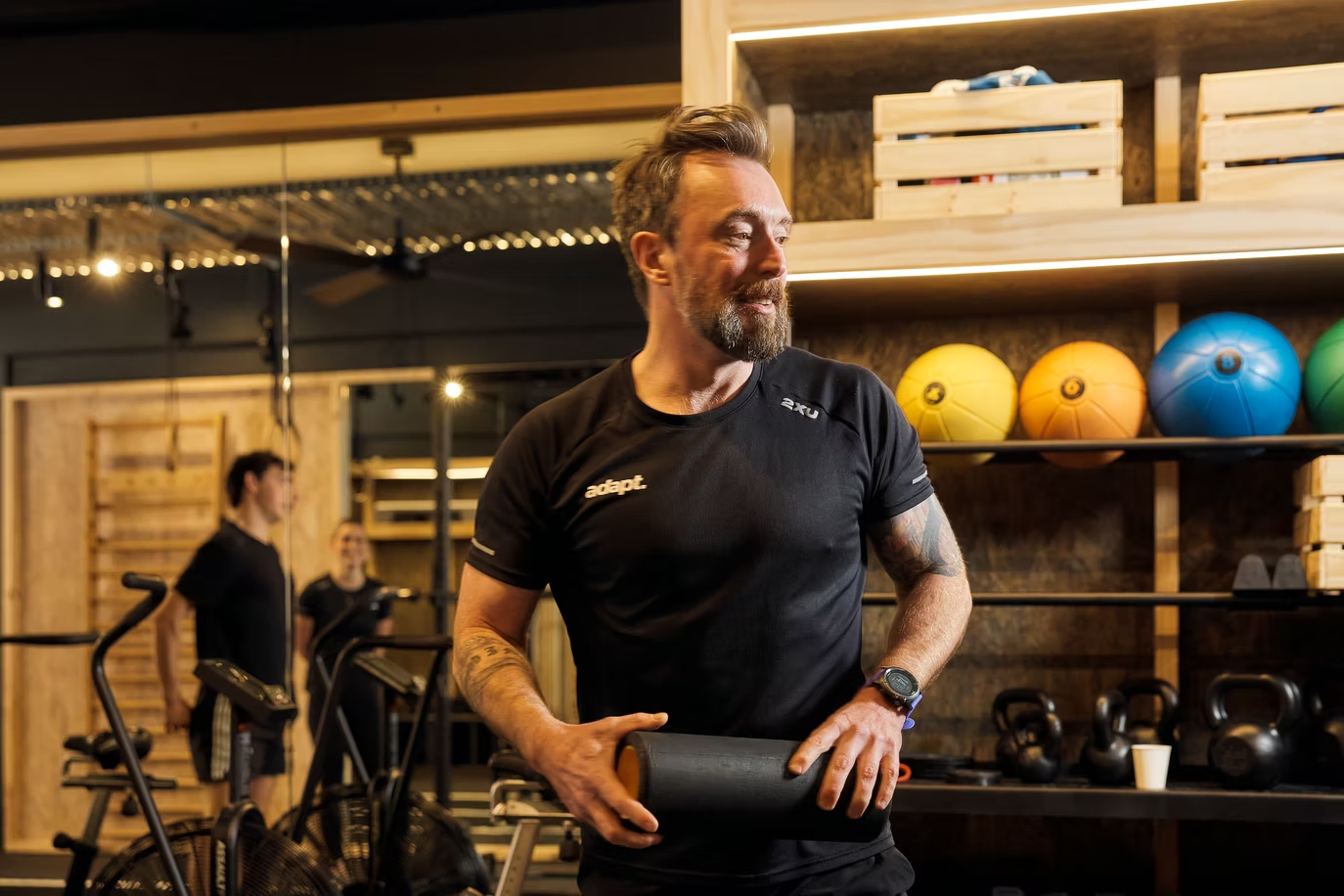
How is range of motion measured?
Usually with a goniometer, a hinged ruler lined up with the joint, or a digital inclinometer, and recorded in degrees. The same position and landmarks are used each time, so the result can be compared with your other side and with earlier visits.
What happens at a first physio appointmentActive and passive range of motion
Comparing the two helps your physiotherapist see whether movement is limited by joint stiffness or by the muscles that move the joint, which shapes the MSK plan.
| Active range of motion | Passive range of motion | |
|---|---|---|
| How it is measured | You move the joint yourself | The physiotherapist moves the joint while you relax |
| What it reflects | Strength, control and comfort through the range | Stiffness in the joint and surrounding tissue |
| Shoulder example | Lifting your arm overhead on your own | Your arm raised for you while you relax |
| Short form | AROM | PROM |
Joints where range of motion shapes the plan
Range is also a regular measure in rehab after surgery.
Knee
Bending and straightening after injury, reconstruction or replacement.
Shoulder
Reaching, rotation and elevation during shoulder rehab.
Hip and spine
How far you can bend, rotate and sit, read with back and hip plans.
Ankle
Dorsiflexion and landing range used in running and sport rehab.
Questions about range of motion
Book a physioWhat counts as normal range of motion?
It varies with age, the joint and the person. The physiotherapist compares your sides and the range your activities need, rather than treating a single number as a pass mark.
Why is range of motion limited after surgery?
Swelling, pain, protective muscle tension and tissue healing can all limit it early on. The plan then works through the range the surgeon's restrictions allow.
Should range of motion exercises hurt?
Some stretch discomfort is common. Sharp or lasting pain should be reported to your physiotherapist so the exercise or the end range can be changed.
Can I measure my own range of motion at home?
Phone apps can give a rough guide, but clinic measurements use consistent positions so results can be compared visit to visit. Home checks are useful for feel, not as a substitute.
The physiotherapists who measure your range
Sam and John measure range when it will change the next block of work, not as a routine score at every visit.

Measures range at assessment and reviews it when it changes the plan.
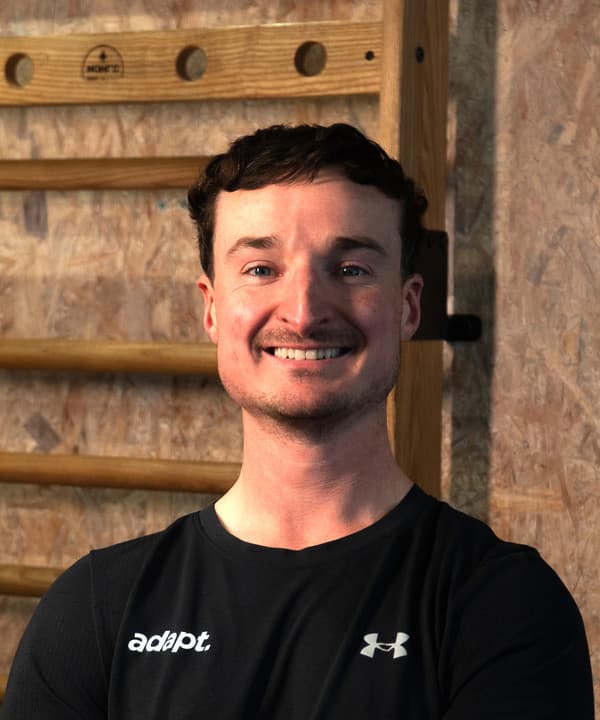
Reads range with strength and gym-task control, not as a score on its own.