
Limb symmetry index: comparing one side with the other
Limb symmetry index, or LSI, compares the strength or performance of one limb with the other and expresses the result as a percentage. At Adapt in North Sydney, your physiotherapist can measure it with VALD ForceDecks and reads it alongside movement quality, tolerance and your surgeon's guidance during ACL rehabilitation and other lower-limb rehab.
Strength and hop tests give different symmetry numbers
LSI divides the involved limb's result by the uninvolved limb's result and multiplies by 100, so a knee that produces 80 units of force where the other produces 100 has an LSI of 80 percent.
| Strength tests | Hop and jump tests | |
|---|---|---|
| What is measured | Peak force in a controlled muscle test, often the quadriceps or hamstrings | Distance, height or force during single-leg hopping, jumping and landing |
| Typical equipment | A fixed testing frame such as VALD ForceFrame | Force plates such as VALD ForceDecks, or a measured hop course |
| What it shows well | How much force each side produces in isolation | How each side absorbs and produces force in a sport-like task |
| What it can miss | How the limb copes with speed, landing and fatigue | Strategies that shift load to the other leg and hide a strength gap |
What LSI is considered ready for return to sport?
Many return-to-sport protocols use an LSI of 90 percent or more as one benchmark, usually across several strength and hop tests. It is not a pass mark on its own: if both legs have lost strength, a high percentage can still hide a deficit, so the number is read with clinical findings.
How return-to-sport decisions are madeSymmetry is one input inside each review
Your physiotherapist decides which tests matter for your phase, records both sides and compares the result with earlier sessions. When the gap narrows or stalls, the strength work on the gym floor is adjusted with the coaching team, so the number shapes the next block of gym-based physiotherapy rather than sitting in a report.
How physiotherapy at Adapt starts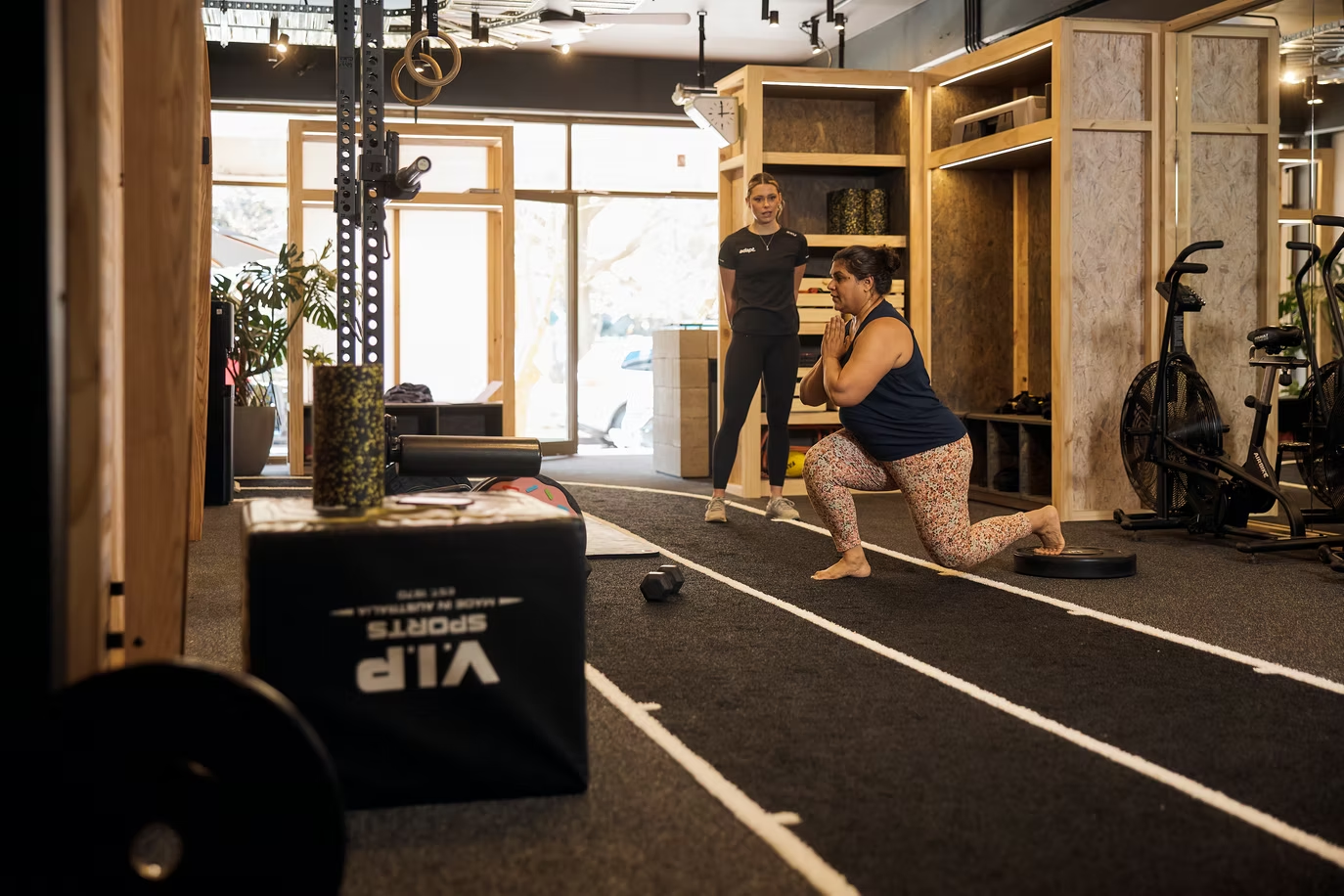
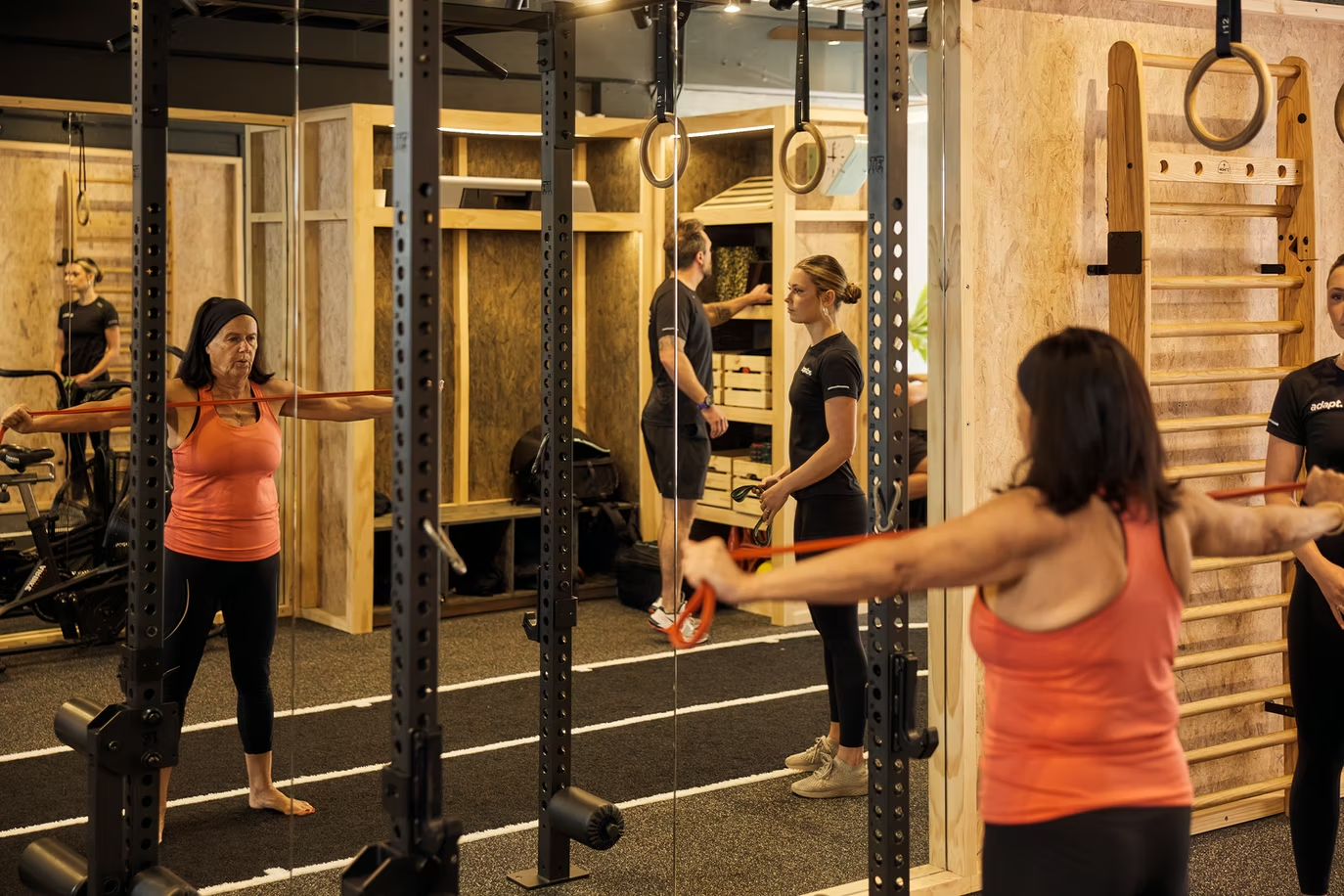
The physiotherapists who test and read LSI
Your physiotherapist chooses the tests for your phase, including a VALD ForceFrame strength test when side-to-side force is the question.

Chooses which LSI tests fit the current rehab phase and reads the number with movement quality.

Compares left and right force results and adjusts the gym program when the gap changes.
Where LSI comes up in rehab
The same side-to-side comparison is used in knee replacement rehab and other lower-limb plans, not only after ACL reconstruction.
ACL reconstruction
Side-to-side strength and hop scores are one input when the plan moves toward sport demands.
Knee replacement
Comparing the operated and unoperated sides shows how force is recovering between reviews.
Sports injuries
Hop and strength symmetry help decide when training load can rise after a lower-limb injury.
Rehab after surgery
Where two sides can be compared, LSI sits beside range, swelling and tolerance.
Questions about limb symmetry index
Book a physioIs limb symmetry index only used after ACL surgery?
No. LSI is also used after other knee, hip, ankle and shoulder injuries and after surgery, wherever two sides can be compared. After ACL reconstruction it is common, but it is not limited to that injury.
Can LSI be higher than 100 percent?
Yes. The involved side can test stronger than the other side. That can reflect a weaker uninvolved limb, a preferred side, or ordinary test-to-test variation, so the physiotherapist reads the number with the rest of the assessment.
How often is LSI retested?
Your physiotherapist retests when a result will inform the next decision, such as changing load or moving phase. There is no fixed schedule. Some blocks need a new number; others continue from the last reading.
What if both legs are injured?
Side-to-side comparison is less useful when both limbs are affected. The physiotherapist then compares your results over time and against the demands of your activity, rather than treating one side as a normal reference.
Check our registration
Dr Sam Baylis and John MacAuliffe are registered physiotherapists. Their profiles describe their roles, and the public register can be used to verify practitioner registration.
Last updated on 21 October 2026