
What force plate testing can and cannot tell you about ACL readiness
Force plate testing with VALD ForceDecks measures how much force each leg produces and absorbs as you jump, land and hold a position, which adds objective numbers to a return-to-sport decision after ACL reconstruction. Research supports reading those numbers alongside strength, hop and clinical criteria rather than treating any one score as a pass mark. At Adapt in North Sydney, your physiotherapist chooses the tests that will inform the next phase of your ACL rehab.
Updated 21 October 2026
What ForceDecks and ForceFrame measure
Both systems record force on each side of the body, but they suit different questions at different points in rehab.
| ForceDecks | ForceFrame | |
|---|---|---|
| What it is | Two force plates, one under each foot | A fixed frame with load cells that you push or pull against |
| Typical tests | Countermovement jumps, drop jumps, landings and strength holds | Isometric tests for muscle groups such as the hamstrings and hip adductors |
| What it shows | Force produced and absorbed by each leg, and how quickly it is produced | Peak force from one muscle group, compared left and right |
| Where it fits in ACL rehab | Later phases, once jumping and landing are part of the plan | Across the phases, when a strength comparison will inform the next step |
Testing that feeds straight into training
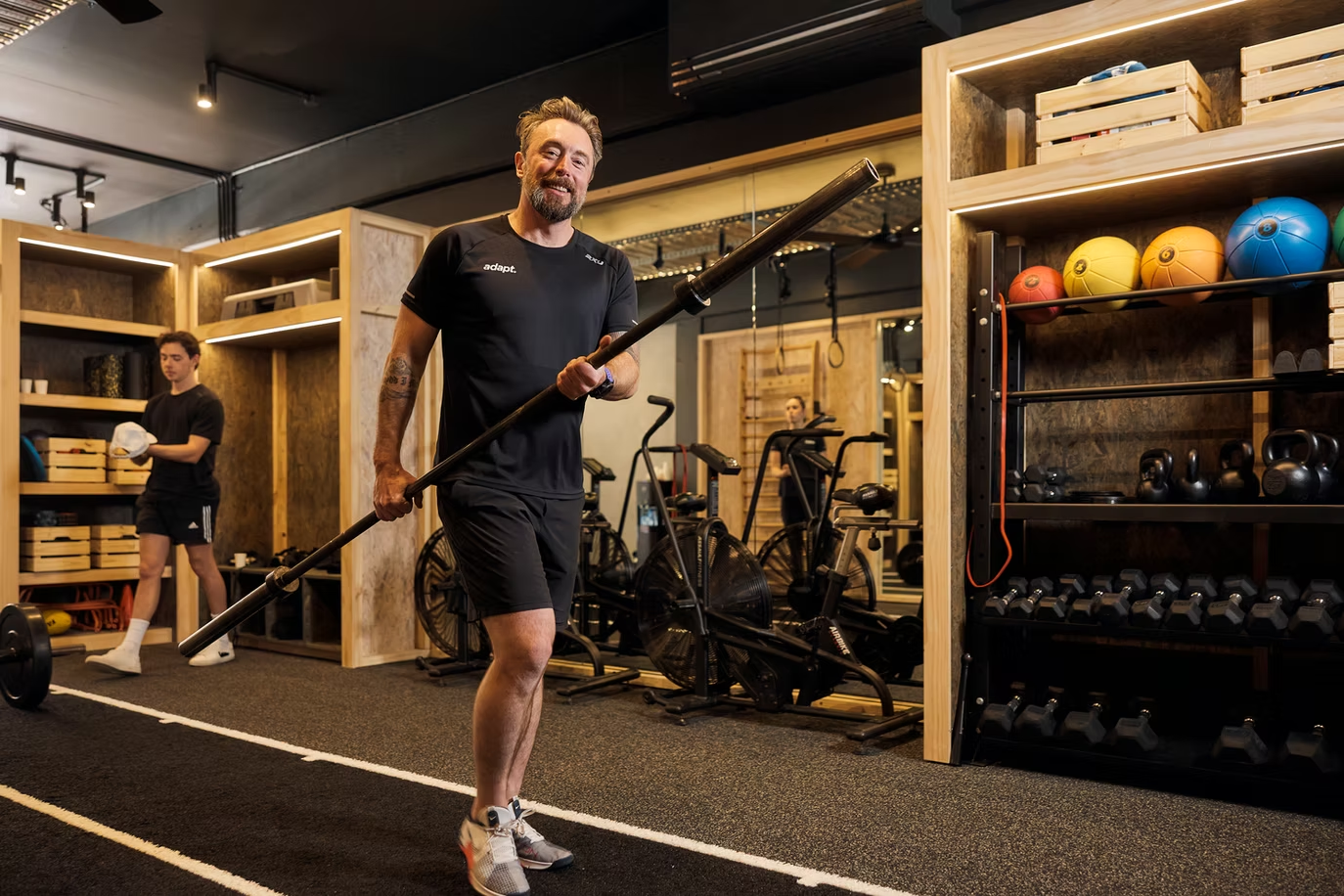
Testing is part of the same program as your strength work at Adapt, so a result can shape your next session instead of sitting in a report. Your physiotherapist reads the numbers with you, and coaches such as James Bowen work from the updated plan in your gym-based sessions.
Gym-based physiotherapy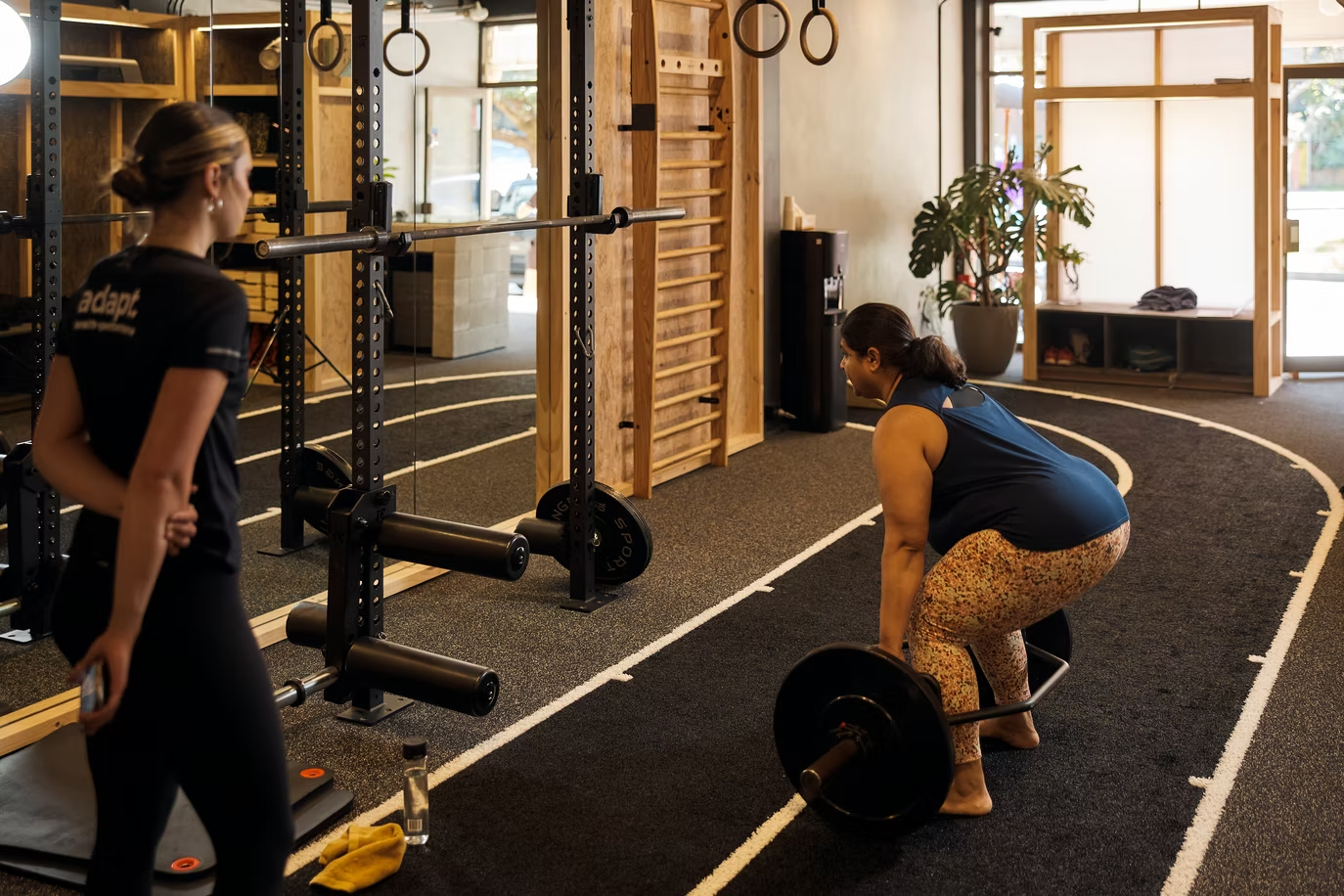
Why one symmetry score is not enough
The limb symmetry index divides the injured leg's result by the other leg's result. A 2024 scoping review in Current Reviews in Musculoskeletal Medicine, led by Elisa Kodama, found that 90 percent or more was the most commonly reported return-to-sport threshold among the studies it included.
In the Delaware-Oslo ACL cohort study, published in the British Journal of Sports Medicine in 2016 and led by Hege Grindem, reinjury was less common among athletes who returned later and who had more symmetrical quadriceps strength before they returned. That finding comes from a prospective cohort of people in pivoting sports, not from a randomised trial.
A 2017 prospective cohort in the Journal of Orthopaedic and Sports Physical Therapy, led by Elizabeth Wellsandt, showed that the index can overestimate knee function after ACL injury, because the uninjured leg also loses strength.
A 2022 controlled laboratory study in The American Journal of Sports Medicine, led by Argyro Kotsifaki, found that athletes tested at return to sport could show a similar triple hop distance on each side while the injured knee still produced and absorbed force differently. Your physiotherapist reads those findings against the rest of your ACL rehab plan.
What is a good limb symmetry index after ACL reconstruction?
90 percent or more is the threshold most often reported in return-to-sport criteria. It is read with absolute strength, movement quality, clinical review and surgeon guidance, rather than treated as a score that decides the next step on its own.
Jumps can show what a strength test misses
A 2025 Sports Biomechanics study of 14 collegiate athletes after ACL reconstruction, led by Yu Song, found asymmetries in jump-landing force persisted even when squat force looked even. Force plates show how each leg produces and absorbs force, and the reactive strength index from a drop jump compares jump height with ground contact time. Those measures can sit inside sports physio planning when a jump test will inform the next decision.
Measures you may see in an ACL test report
A report lists the measures that were relevant to the decision in front of you, not a standard set of scores.
Jump height and power
How high you jumped and how quickly each leg produced force.
Landing force and asymmetry
How much force each leg absorbed on landing, and the difference between sides.
Reactive strength index
Jump height compared with ground contact time in a drop jump.
Isometric strength
Peak force from a muscle group held still, compared left and right.
Who reads your results
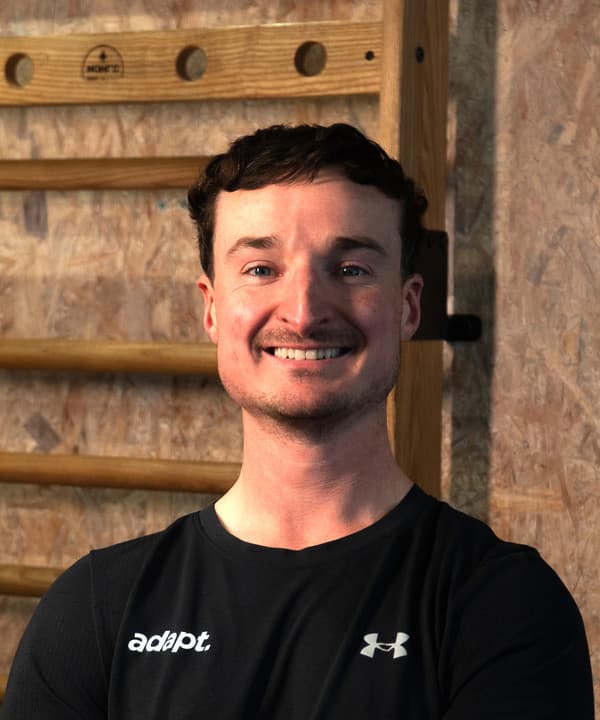
Sam Baylis and John MacAuliffe are registered physiotherapists who read the numbers with you. James Bowen coordinates the training that follows. You can check Sam and John on the public register.

Reading force plate and frame results against the surgical protocol and the next training block.
Comparing left and right strength numbers with movement quality and load in the gym.

Turning the updated plan into the next supervised strength session on the floor.
How testing fits a return-to-sport decision
Testing is added when a measurement will inform the next decision, then the result changes the work that follows.
Book a physioFollow the surgical protocol first
Timing and restrictions from your surgeon set what can be tested and what stays off the plan.
Set a starting point when the phase allows
Strength holds can be used earlier than jumping, once the plan already includes that work.
Retest when a decision is due
The same measures are repeated when a change in the plan needs a comparison, not on a fixed calendar.
Read the numbers with the clinical picture
The result is read with movement quality, symptoms, hop testing and surgeon guidance.
Agree the next block
Your physiotherapist explains what the numbers change in the next training block.
Where the evidence is still developing
Most studies are in athletes, thresholds vary by test and device, and no single test has been shown to predict reinjury on its own, so results guide the conversation rather than end it.
Can I claim force plate testing on my health fund?
Testing is not claimable on private health extras. Physiotherapy appointments may be claimable when your extras include physio, with limits set by your policy. Fees are confirmed before you book, so you know the cost of the appointment itself.
See fees and rebatesQuestions about ACL testing
Book a physioWhen is the first force plate test after ACL surgery?
It depends on your surgeon's protocol and which phase of rehab you are in. Strength holds can be used earlier than jumping, and jumping starts once the plan already includes that work. There is no standard first-test date that applies to every reconstruction.
Does passing a force plate test mean I can return to sport?
No. A force plate result is one input, read with clinical review, strength, hop testing, surgeon guidance and the demands of your sport. Passing a single test does not decide return to sport on its own.
Is force plate testing better than a hop test?
They measure different things. Hop distance shows how far you travel, while force plates show how each leg produces and absorbs force. Research on hop symmetry after ACL reconstruction suggests reading both together rather than choosing one.
Why does my uninjured leg matter in ACL testing?
The limb symmetry index compares the injured leg with the other leg, and that uninjured leg also loses strength after ACL injury. Symmetry can then look better than the function you actually have, so absolute values are checked as well.
Can I have testing at Adapt if my rehab started elsewhere?
Yes. Book a physiotherapy assessment and bring your surgical protocol and any earlier results. Your physiotherapist uses those documents with the assessment to decide which measures, if any, will inform the next step.
Is VALD testing used for injuries other than ACL?
It can be, when a strength or jump measure will inform the next decision. That includes comparing hamstring or hip strength between sides, or recording how force is produced during a jump, for injuries other than ACL reconstruction.
Ask about ACL testing
Tell us where you are in rehab and what you want the numbers to inform, and the team can suggest the right first appointment.
Sources
- Simple decision rules can reduce reinjury risk by 84% after ACL reconstruction: the Delaware-Oslo ACL cohort study
British Journal of Sports Medicine, 2016
- Limb symmetry indexes can overestimate knee function after anterior cruciate ligament injury
Journal of Orthopaedic and Sports Physical Therapy, 2017
- Symmetry in triple hop distance hides asymmetries in knee function after ACL reconstruction in athletes at return to sports
The American Journal of Sports Medicine, 2022
- Jump-landing kinetic asymmetries persisted despite symmetric squat kinetics in collegiate athletes following ACL reconstruction
Sports Biomechanics, 2025
- Return to sport following ACL reconstruction: a scoping review of criteria determining return to sport readiness
Current Reviews in Musculoskeletal Medicine, 2024