
How often should you do your rehab exercises?
Strength guidelines recommend muscle-strengthening work on two or more days a week, and research on training frequency points to the total work you complete across the week, more than any single session, as the main driver of strength gains. At Adapt in North Sydney, your physiotherapist sets that weekly dose at your assessment and reviews it as your tolerance changes, with gym-based sessions available between reviews.
Updated 21 October 2026
What the research says about training frequency
A 2018 systematic review and meta-analysis in Sports Medicine, led by Jozo Grgic, compared resistance training done on different numbers of days each week. Training more often was linked with larger strength gains, but when total weekly volume was matched, frequency on its own made no significant difference.
That makes frequency a planning tool. Spreading the work over more days lets you complete the same total with shorter sessions and less fatigue in each one, which is often easier to fit around work, sleep and symptoms.
Australia's physical activity guidelines recommend muscle-strengthening activities on two or more days a week, and a 2021 meta-regression of trials in adults over 60 found strength improved only slightly with more than two sessions a week.
Most of these trials studied healthy adults rather than people with an injury, so they guide the shape of a rehab week without setting your dose. Your physiotherapist sets that from your assessment, your symptoms and the demands of your work, sport and daily life.
Shorter sessions spread across your week
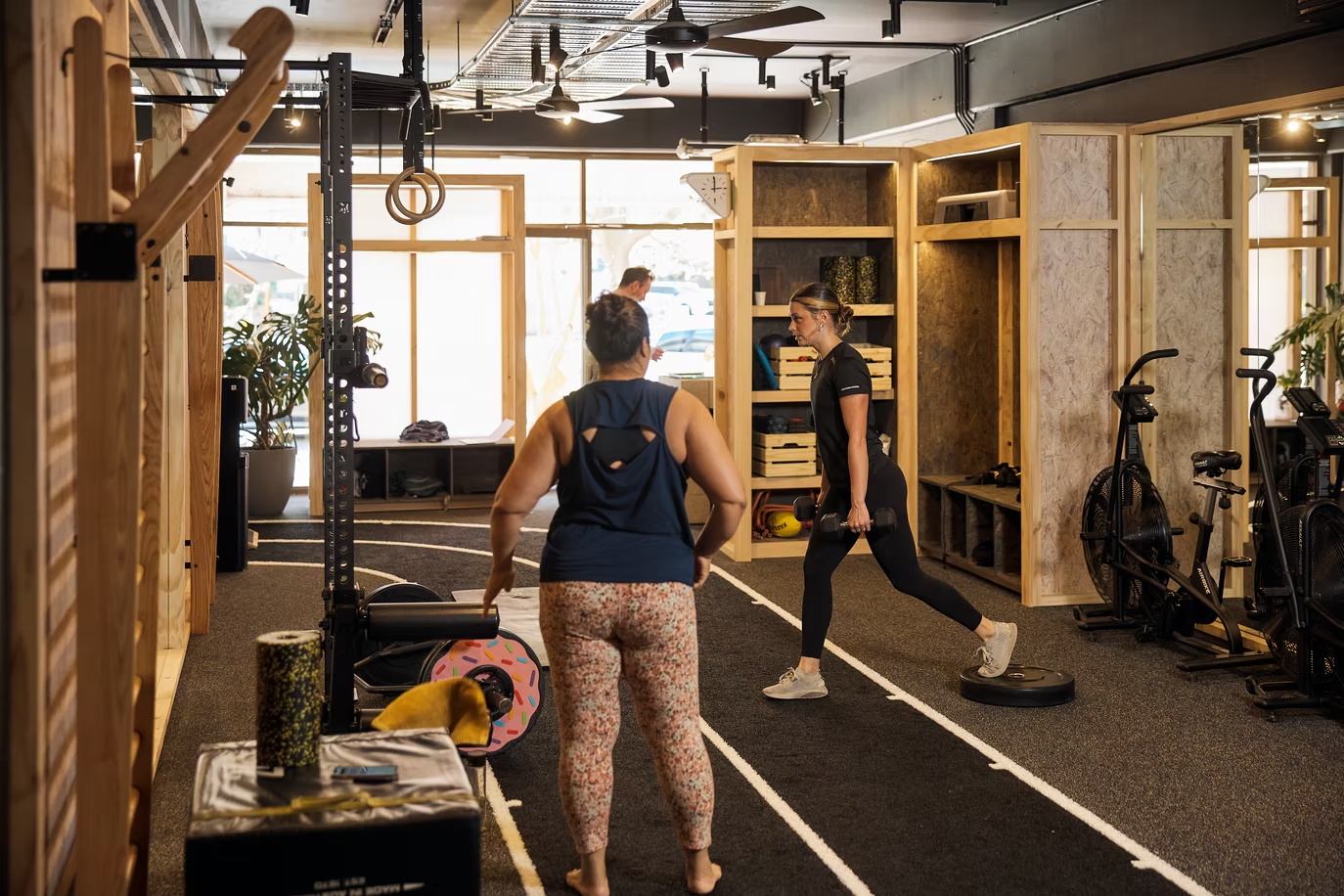
A rehab week at Adapt can combine exercises you do at home with supervised sessions on our gym floor, all written into one program in the Adapt app with a video for each exercise. Your physiotherapist decides how many sessions the week needs and what each one includes, so a missed day can be rebalanced instead of lost.
How gym-based physio works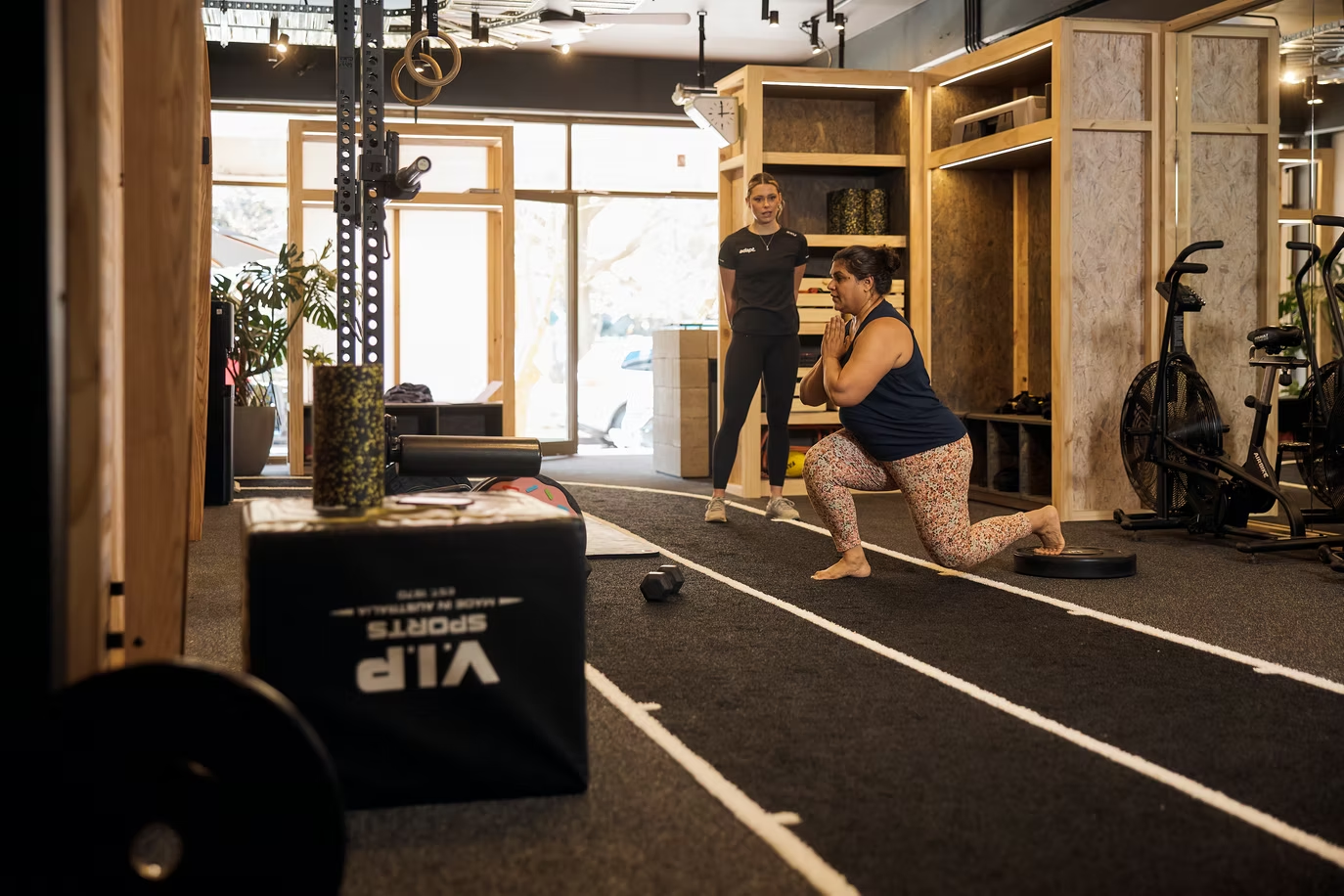
One long session or several shorter ones?
The weekly total can be reached either way, but how it is split changes each session.
| One session a week | Spread across the week | |
|---|---|---|
| Total weekly work | Limited by what you can tolerate in one visit | Built up across several manageable sessions |
| Fatigue in each session | Higher, as all the work lands on one day | Lower, with recovery between sessions |
| How symptoms are tracked | Checked once a week | Noticed after each session and raised at your next review |
| Time each session takes | Longer | Often shorter |
Can short sessions count towards my rehab?
Yes, when they are part of the planned weekly total. Research on training frequency points to the work you complete across the week, and your physiotherapist sets what each short session includes so those minutes still count toward the dose.
Book a physio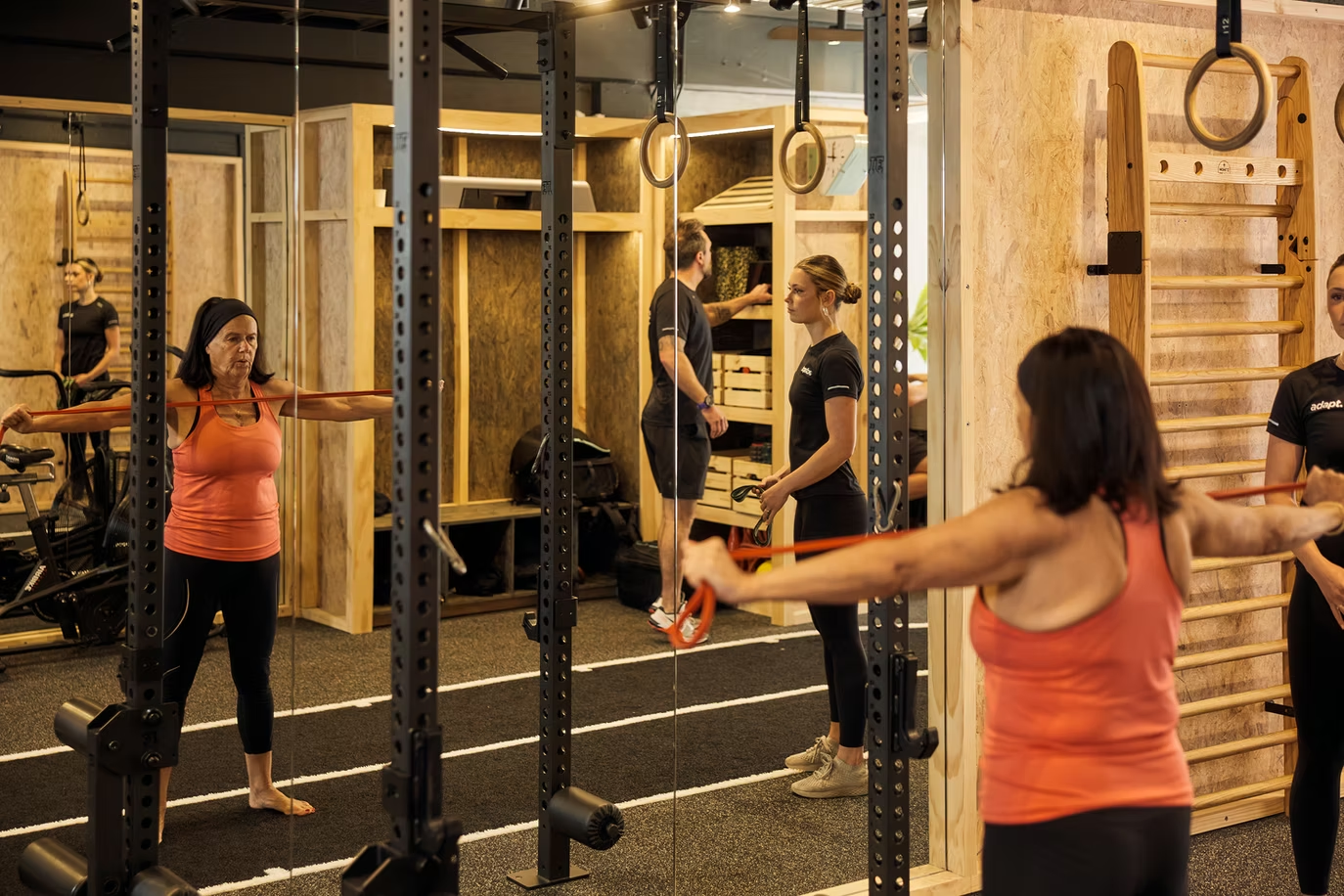
Why home exercise programs often slip
A 2017 systematic review in Disability and Rehabilitation, led by Rosie Essery, reported that non-adherence to home-based physio programs can reach 70 percent, and found self-motivation, self-efficacy and social support among the factors linked to whether people keep doing them. At Adapt each exercise has a video in the app, and supervised gym sessions are available when home work keeps slipping.
Gym-based physiotherapyHow your physiotherapist sets the weekly dose
The weekly dose is set at your physiotherapy assessment from your presentation and the days you can keep, then adjusted as your response is reviewed.
Book a physioAssess your tolerance and goals
Your physiotherapist looks at your injury or surgery, symptoms, and the work, sport and daily tasks the program has to support.
Agree the days that fit your week
You choose days that can actually be kept, then the work is split across those days rather than stacked into one long visit.
Set the sets, load and rest
Each session is written into the Adapt app with the exercises, sets and rest your physiotherapist has chosen for that week.
Review the response and adjust
The next review looks at how you tolerated the week, then the dose is held, spread or reduced from those findings.
When rehab hands over to regular training
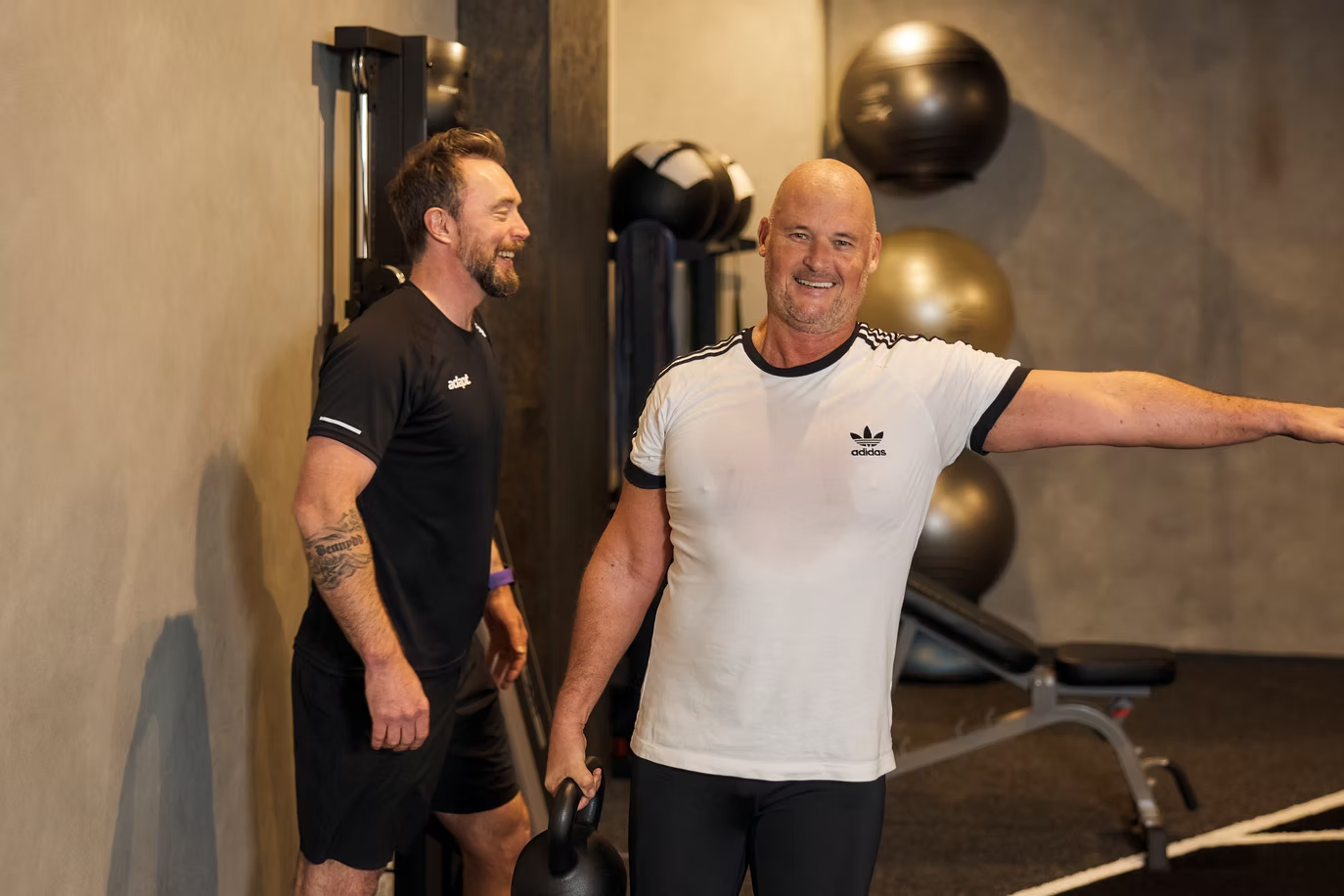
Once your physiotherapist is happy with the plan, the same weekly rhythm can carry into personal training or the gym, with coaches working from the program.
How the weekly rhythm changes through rehab
The weekly pattern changes with the stage of rehab, and after surgery it follows the surgeon's protocol first.
Early and settling
Short, gentle sessions spread through the week as advised, while symptoms and tolerance are still being mapped.
Building strength
Strength work is placed on separate days so each session can be recovered from before the next load.
After surgery
Frequency follows the surgeon's protocol first, then the physiotherapist spreads the allowed work across the week.
Ongoing strength
The same weekly rhythm can continue as regular training once the physiotherapist is happy with the plan.
The physiotherapists who set your program
Sam Baylis and John MacAuliffe are the registered physiotherapists who set and review your weekly exercise dose. Their details are on the public register.

Sets the weekly exercise dose at assessment and reviews it as your tolerance changes.
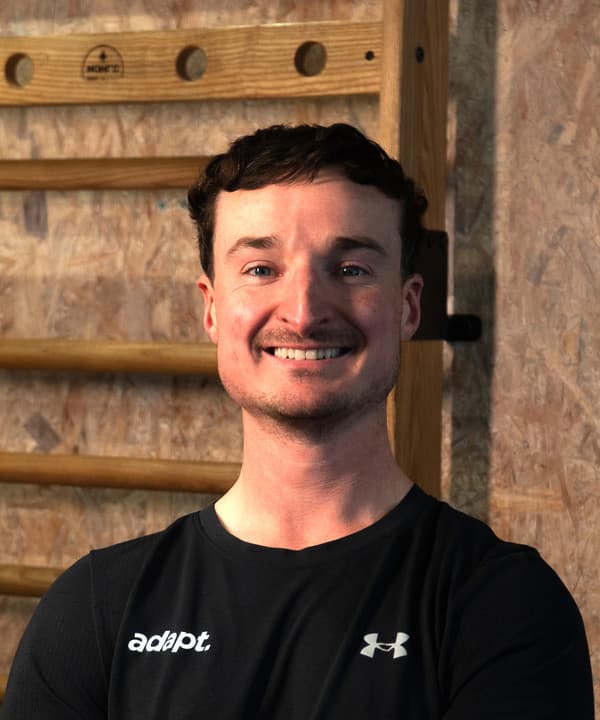
Plans how that dose is split across home work and supervised gym sessions.
What does a rehab week cost at Adapt?
It depends on the mix of physiotherapy appointments and supervised gym sessions in the week. Physio fees are confirmed before you book and may be claimable on extras that include physio, while supervised gym sessions and the Adapt app are not.
Fees and rebatesQuestions about rehab exercise frequency
Book a physioIs it better to do rehab exercises every day?
Not always. Gentle movement may be daily, while strength work usually needs recovery days between sessions, and Australia's guidelines recommend muscle-strengthening work on two or more days a week. Your physiotherapist sets which exercises sit on which days from your assessment.
What if I miss a few sessions in a week?
The weekly total matters more than any one session, so the missed work can be moved or spread rather than stacked into one catch-up. Tell your physiotherapist if symptoms caused the gap, because that finding can change the next week's dose.
Can I do my rehab exercises at home instead of the gym?
Often, when the exercises suit home. Supervised gym sessions add coaching and heavier loading when the plan needs it, and both sit in the same Adapt app program with a video for each exercise.
Does training more often mean faster rehab?
Not necessarily. Research links strength gains mainly to total weekly work, and extra sessions help only when there are rest days between them. Progress is reviewed at your appointments, not promised.
How long should a rehab session take?
There is no fixed length. Session time follows the exercises, sets and rest your physiotherapist has planned, and shorter sessions spread across the week are a common way to reach the weekly total.
Do I still need physio appointments if I train on my own?
Yes. Reviews let your physiotherapist check the response and change the dose, even when you train on your own between visits. How often those reviews happen depends on your stage and is agreed at assessment.
Ask about your rehab week
Tell us about your current rehab week and the team can suggest the right first appointment.
Sources
- Effect of Resistance Training Frequency on Gains in Muscular Strength: A Systematic Review and Meta-Analysis
Sports Medicine, 2018
- A meta-regression of the effects of resistance training frequency on muscular strength and hypertrophy in adults over 60 years of age
Journal of Sports Sciences, 2021
- Predictors of adherence to home-based physical therapies: a systematic review
Disability and Rehabilitation, 2017
- Recommendations for adults (18 to 64 years)
Australian Government Department of Health, Disability and Ageing, 2026