AdaptBook
Menu

Why ACL strength work starts on both legs

After ACL reconstruction, the operated quadriceps usually has the most strength to rebuild, and two-legged lifts let it work under heavier load early on. Your physiotherapist decides when single-leg work starts, and our coaches run it on the gym floor.

Load comes before balance

Single-leg exercises ask the knee to balance, control and produce force at once, so the load has to stay light. Two-legged exercises remove most of the balance demand, so the quadriceps can work against heavier load.

That is why early ACL rehab at Adapt leans on the leg press and squat patterns, within your surgeon's protocol.
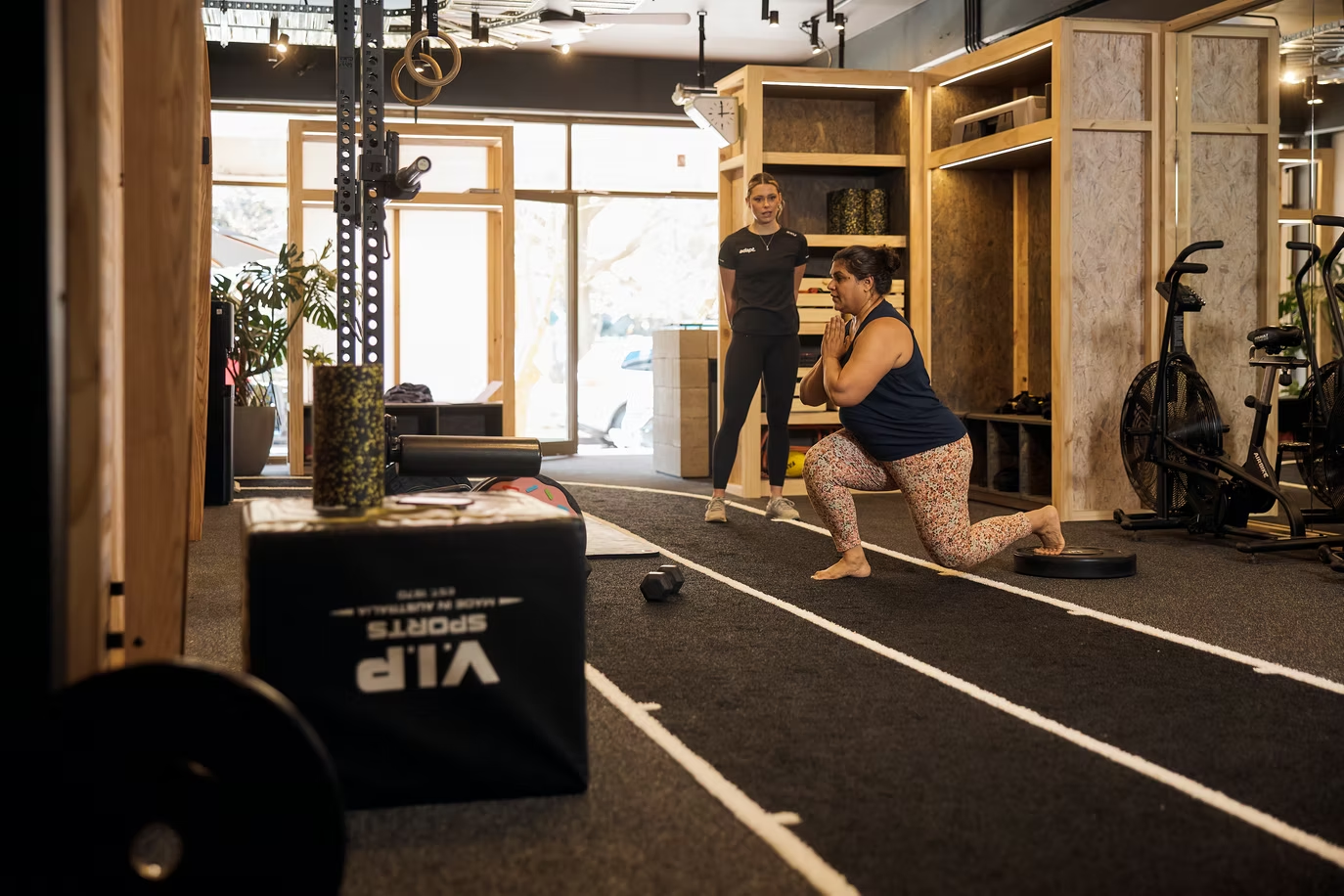
Client holding a split-stance lunge on a floor pad while a coach watches from the gym floor at Adapt, North Sydney

From two legs to one

Each step starts when your physiotherapist's review supports it, and the timing follows your knee.

Book an assessment
  1. Both legs

    Leg press and other two-legged lifts, loaded heavier as your knee tolerates each block.

  2. Split stance

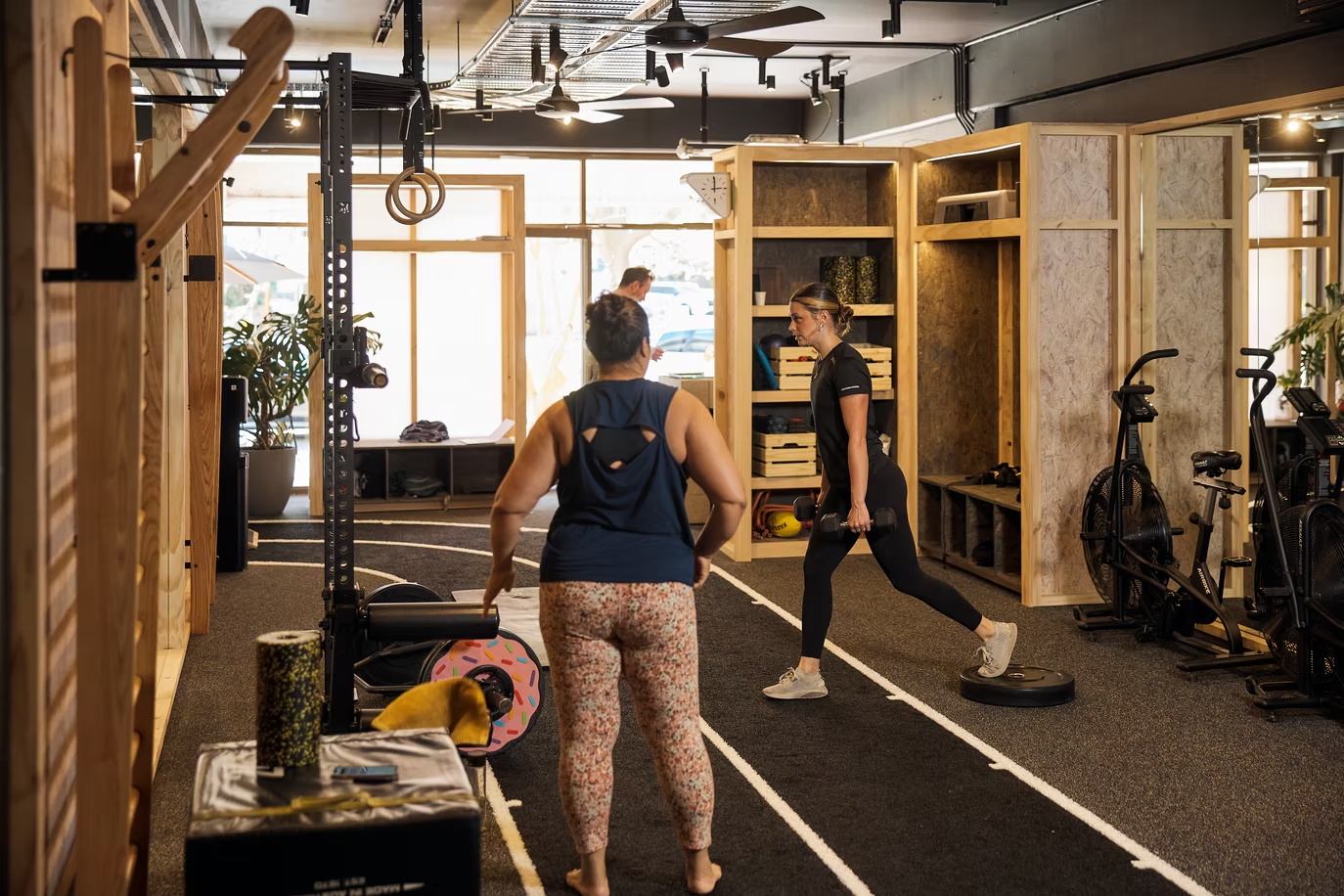
    One foot steps forward, so the operated leg takes more of the work.

  3. Single leg

    The operated leg lifts on its own once your physiotherapist's review supports it.

  4. Single leg with speed

    Faster single-leg work comes last, after slow, controlled loading is in place.

Measuring the difference between legs

At each review, VALD ForceDecks and ForceFrame compare the operated side with the other, so your physiotherapist reads the gap in numbers rather than by feel.

More even quadriceps strength before return went with fewer knee reinjuries in the Delaware-Oslo ACL cohort (Grindem and colleagues, 2016), which is why strength testing tracks the gap.

Client standing on the gym floor while a coach balances on one foot on a weight plate at Adapt, North Sydney

Does the stronger leg take over on a leg press?

It can, so coaches watch how the work is shared. If the uninjured side takes over, they change foot position, range or load, and your physiotherapist checks the block at the next gym-based assessment.

How each side is measured

Who plans and runs the strength work

Your physiotherapist sets each step and James Bowen's coaching team runs the sessions.

  • James Bowen on the gym floor at Adapt, North Sydney, where he runs ACL strength blocks

    James Bowen

    Director & Head of Training

    Accredited Strength & Conditioning Coach

    James Bowen

    Runs the two-legged and single-leg strength blocks on the gym floor.

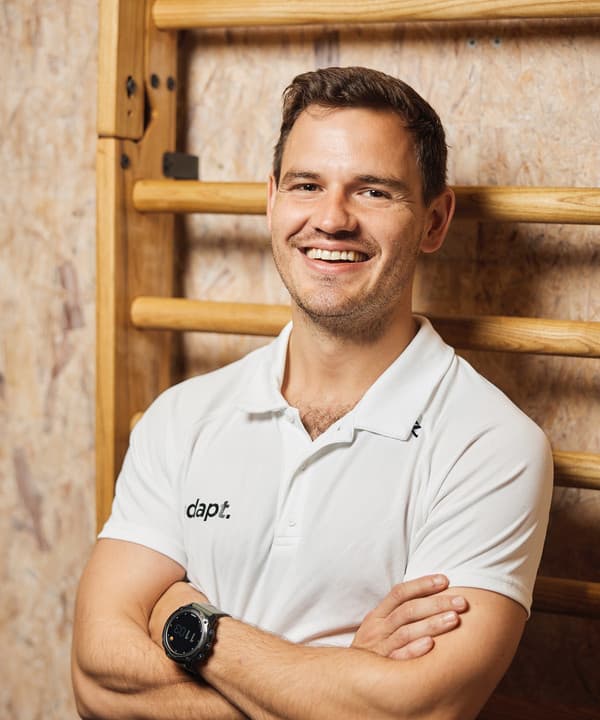
  • Dr Sam Baylis at Adapt, North Sydney, who sets when ACL strength work moves from both legs to one

    Dr Sam Baylis

    Director & Physiotherapist

    Physiotherapist, DPT, AHPRA-registered

    Dr Sam Baylis

    Sets when strength work moves from both legs to one.

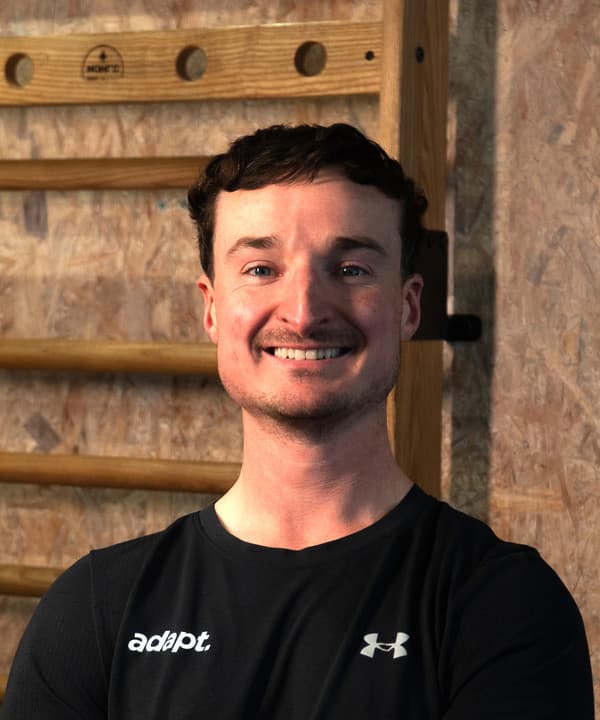
  • John MacAuliffe at Adapt, North Sydney, who reviews the operated knee against the current strength block

    John MacAuliffe

    Senior Physiotherapist

    Physiotherapist, AHPRA-registered

    John MacAuliffe

    Reviews the operated knee against the current strength block.

Where single-leg work comes in

Single-leg work starts when your physiotherapist's review supports it, not on a set week. van Melick and colleagues (2016) recommend strength, hop and movement tests to guide it, the same mix used in sports physio. A physiotherapy appointment sets that review.

Book an assessment
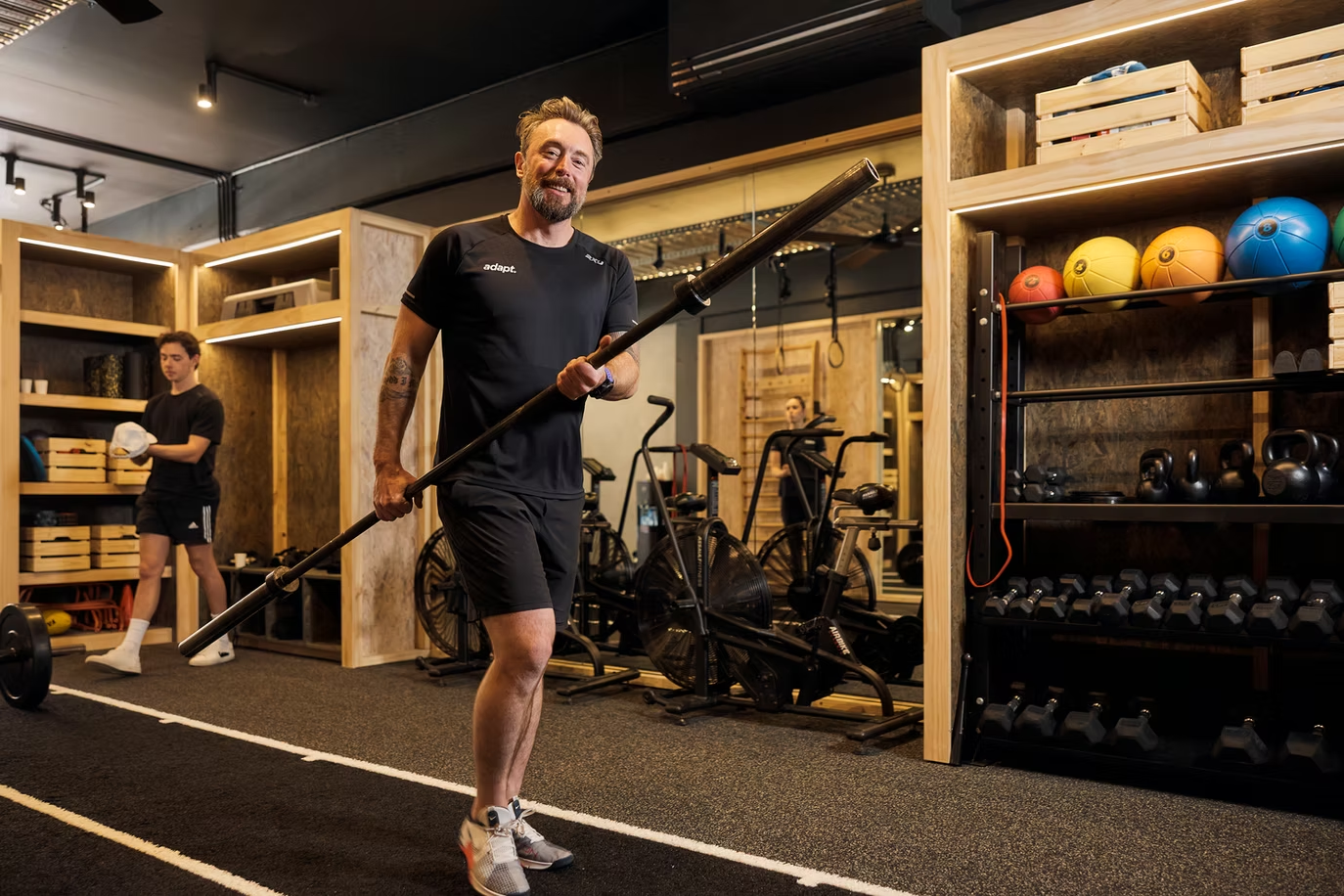
James Bowen carrying an empty barbell across the gym floor at Adapt, North Sydney
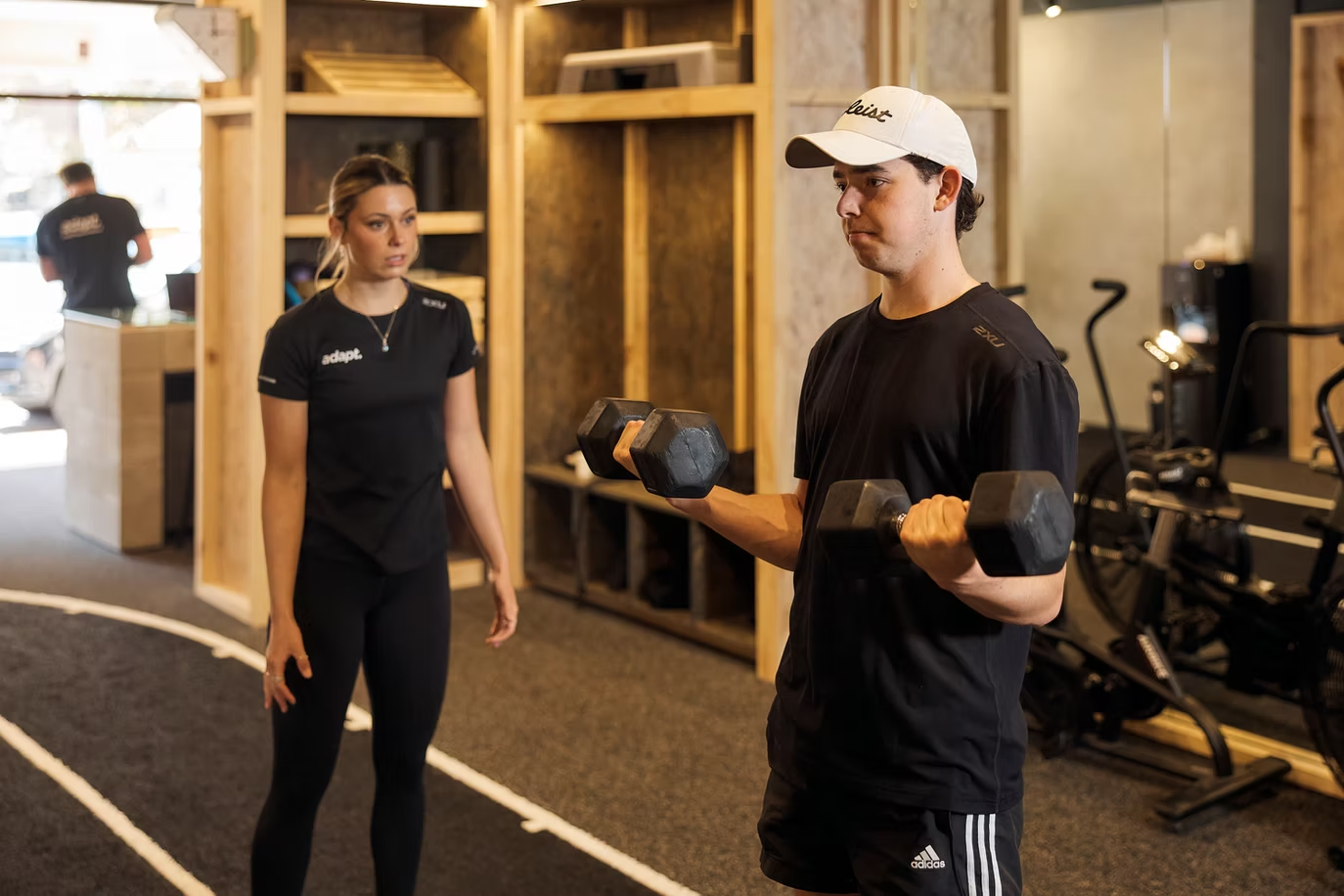
Client holding a pair of dumbbells at his sides while a coach watches the set at Adapt, North Sydney

Should I use a leg extension machine after ACL surgery?

Only when your surgeon's protocol allows it, usually in a limited range at first. Your physiotherapist decides whether it fits the current block. Contact Adapt if you want that checked before you book.

Book a physio

Questions about ACL strength work

Book an assessment

Will the first ACL strength sessions feel heavy?

They can, because two-legged lifts are chosen so the operated quadriceps can work against a load that single-leg work cannot hold yet. The physiotherapist sets the starting load from the protocol and the first review, and coaches keep the movement inside that range.

What decides when single-leg ACL strength work starts?

Your physiotherapist's review decides it, not a set week. Single-leg work waits until the operated side is sharing the two-legged load and the protocol allows the stance. Coaches do not move that step on their own.

Does graft type change the two-legged to single-leg order?

The order stays the same. Graft type and your surgeon's protocol change what range and load are allowed in each step, and the physiotherapist reads those limits at each review before coaches progress the block.

What should I do if my knee swells after an ACL strength session?

Tell your coach at the next session and your physiotherapist at the next review, so the current load and range can be checked. Some swelling can follow heavier two-legged work. The plan is then adjusted from that review.

Do I see a physiotherapist or a coach for ACL strength work?

Both. Your physiotherapist plans the steps and reviews the knee. Coaches run the strength work on the gym floor from that plan, so the same order is followed between reviews.

Should I keep training the uninjured leg during ACL rehab?

Yes, unless your physiotherapist asks you to change it. Two-legged lifts use both legs on purpose so the operated quadriceps can work under load, and reviews compare the two sides rather than guessing the next step from feel alone.

Sources

  1. Simple decision rules can reduce reinjury risk by 84% after ACL reconstruction: the Delaware-Oslo ACL cohort study

    British Journal of Sports Medicine, 2016

  2. Evidence-based clinical practice update: practice guidelines for anterior cruciate ligament rehabilitation

    British Journal of Sports Medicine, 2016

Plan your ACL rehab at Adapt

Check our registration

Sam and John are registered physiotherapists who plan ACL rehab at Adapt. Their AHPRA registration details are on their profiles.

Last updated on 21 October 2026