What the research says about muscle and longevity after 40
Muscle mass and strength decline with age, and large studies link more muscle and greater strength with a lower risk of early death in older adults. A 2022 meta-analysis found regular muscle-strengthening activity was associated with lower mortality, with the largest reduction at around 30 to 60 minutes a week. At Adapt in North Sydney, our coaches build that training into a personal training or small group plan you can keep for years.
Updated 21 October 2026
How muscle and strength change after 40
Muscle mass and strength both fall gradually with age. The European Working Group on Sarcopenia in Older People now treats low muscle strength as the first sign of sarcopenia, with muscle mass measured to confirm it, because strength predicts problems with daily function better than muscle size does.
Strength training for longevityHow much strength training the research points to
A 2022 systematic review and meta-analysis of cohort studies in the British Journal of Sports Medicine, led by Haruki Momma, found muscle-strengthening activity was associated with a 10 to 17 percent lower risk of death from any cause, cardiovascular disease, cancer and diabetes, independent of aerobic exercise.
The largest reduction appeared at about 30 to 60 minutes a week, which fits Australia's physical activity guidelines of muscle-strengthening work on two or more days a week. Combining strength work with aerobic activity was associated with a lower risk again.
These are observational studies, so they show an association rather than proof that lifting causes a longer life, and people who train may differ in other ways. Trials in older adults do show that resistance training builds strength, which is the part you can measure as you go.
Is it too late to start strength training at 60?
No. Trials of resistance training in adults over 60 show that strength still improves, and a 2021 meta-regression in the Journal of Sports Sciences found little extra benefit from more than two sessions a week. Two sessions a week is a common starting target, and a coach at Adapt sets the load from where you are now.
Start personal trainingMuscle mass or muscle strength?
Research links both with how older adults fare, but they are measured differently and do not tell you the same thing.
| Muscle mass | Muscle strength | |
|---|---|---|
| What it is | How much muscle you carry | How much force you can produce |
| How it is measured | Body composition scans | Grip strength, chair rises and lifts |
| What research links it to | Lower mortality in older adults (Srikanthan, American Journal of Medicine, 2014) | Lower mortality and better physical performance (Kim, Geriatrics and Gerontology International, 2016) |
| How it is trained | Progressive resistance work | Progressive resistance work with heavier efforts as you adapt |
Coaching that keeps you training for years
James Bowen and Teal Kilbride plan training around your history and goals, progressing it in blocks so the work keeps moving forward.
Personal training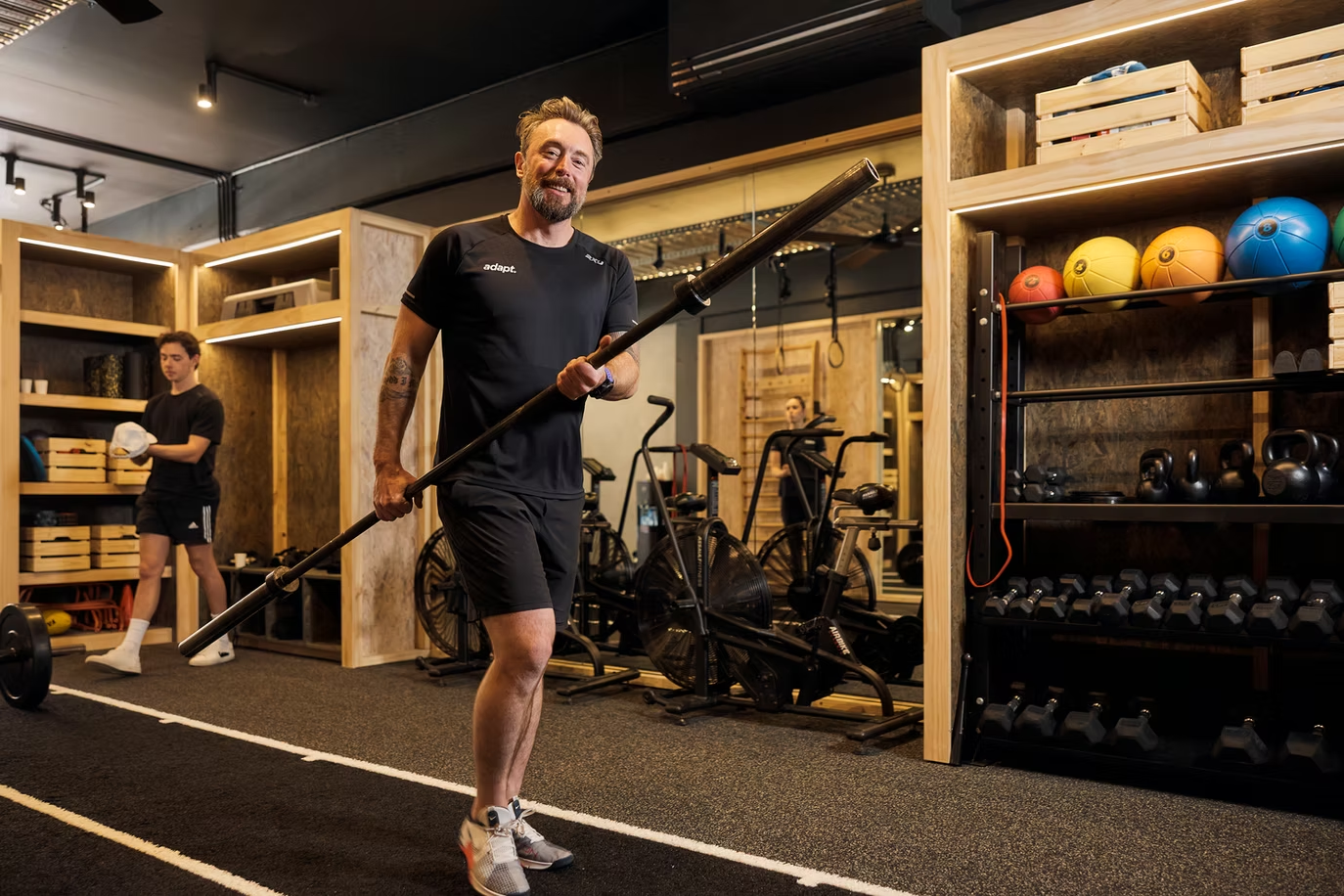
Ways to start strength training at Adapt
Pick the format that matches how much coaching you want, and start with a physio assessment if an old injury needs checking first.
One-to-one coaching
A coach writes the program and takes you through each session.
Small group strength
Coach-led sessions with a planned workout and a small group in the room.
Training on your own program
Follow a written program on the gym floor, with coaching available when you want it.
Training around an old injury
A physiotherapist can assess what to adjust, then coaches work from that plan.
Strength for longevity
Ongoing strength work planned for the years ahead, not a short block.
Who plans your strength training
James Bowen, Teal Kilbride and Sam Baylis plan the work together when an old injury sits behind the training.

Writes long-term strength blocks from your history, then reviews them as the work progresses.

Coaches those blocks one to one and in small groups, adjusting load as you adapt.

Assesses an old injury or joint niggle before the coaches write the training plan.
How a long-term strength plan is built
Your coach writes one program and keeps it moving, so each block has a reason.
Start personal trainingStart with your history and goals
What you have done, what you want from training, and any injury that should be checked first.
Learn the main movement patterns
The lifts and holds your program is built on, taught at a load you can control.
Progress load in planned blocks
Weight, sets and rest change on a schedule, not from session to session guesswork.
Review and retest
Strength you can measure is checked, then the next block is written from that.
What the research cannot tell you yet
Most longevity data come from observational cohorts, studies differ in how they measure training, and no trial has followed lifters long enough to show a longer life directly, which is why the plan tracks the strength you can measure.
What does strength training at Adapt cost?
It depends on how you train, from gym membership to personal training or small group classes. Current options are on the membership and personal training pages and are confirmed before you start. Training is not claimable on private health extras.
Questions about strength training after 40
Start personal trainingHow many days a week should I strength train after 40?
Australia's physical activity guidelines recommend muscle-strengthening work on two or more days a week. A 2022 meta-analysis in the British Journal of Sports Medicine, led by Haruki Momma, found the largest association with lower mortality at about 30 to 60 minutes a week. Your coach sets how that time is split.
What is sarcopenia?
Sarcopenia is the progressive loss of muscle strength and mass with age. The 2019 European Working Group consensus (EWGSOP2) treats low muscle strength as the first sign and uses muscle mass to confirm the diagnosis. It is a clinical definition, not a training plan.
Is grip strength a good marker of health?
Large studies link lower grip strength and lower leg strength with higher mortality and poorer physical performance in older adults. A 2016 study in Geriatrics and Gerontology International found strength predicted those outcomes better than muscle mass. Grip strength is one simple measure, not a diagnosis.
Should I do cardio or strength training after 40?
Both. Australia's guidelines recommend aerobic activity and muscle-strengthening work, and Momma's 2022 meta-analysis found combining them was associated with a lower risk of death than either on its own. A coach can help you fit both into the week.
Can I start strength training with an old injury or joint pain?
Often, yes. A physiotherapy assessment at Adapt can set what to avoid or adjust, and your coach works from that plan. Book a physio if the injury has not been reviewed recently, then start training from the written program.
Do I need to be fit before I start at Adapt?
No. Your coach sets the starting point from where you are now, teaches the movements in your program, and progresses load in planned blocks. You do not need a fitness base before the first session, and an old injury can be assessed first if needed.
Ask about starting strength training
Tell us how you want to train and whether an old injury needs a physio look first.
Sources
- Cruz-Jentoft AJ et al. Sarcopenia: revised European consensus on definition and diagnosis
Age and Ageing, 2019
- Srikanthan P, Karlamangla AS. Muscle mass index as a predictor of longevity in older adults
American Journal of Medicine, 2014
- Kim YH, Kim KI, Paik NJ, Kim KW, Jang HC, Lim JY. Muscle strength: a better index of low physical performance than muscle mass in older adults
Geriatrics and Gerontology International, 2016
- Momma H et al. Muscle-strengthening activities are associated with lower risk and mortality in major non-communicable diseases
British Journal of Sports Medicine, 2022
- Kneffel Z, Murlasits Z, Reed J, Krieger J. A meta-regression of the effects of resistance training frequency on muscular strength and hypertrophy in adults over 60 years of age
Journal of Sports Sciences, 2021
- 24-hour movement guidelines for adults 18 to 64 years
Australian Government Department of Health, 2021